VER’s return on investments 7.8% during 1 January–30 September 2026; ten-year average annual return 6.3%
Published 2026-10-26 at 16:11
INVESTMENT ENVIRONMENT
The stock market continued to perform strongly in the third quarter. The markets were boosted by favorable corporate earnings trends, which led to a decline in share valuations relative to earnings expectations, despite historically high share prices. As was the case during the early part of the year, earnings forecasts rose particularly among semiconductor companies, which provided a boost to emerging markets and U.S. equities in particular.
Interest rates rose sharply towards the end of the third quarter. The central banks of Europe and the United States raised their policy rates in response to rising inflation expectations, and longer-term market interest rates also rose significantly. Behind this rise lie, on the one hand, strong economic growth – particularly in the United States – and the substantial funding requirements of artificial intelligence investments, and on the other hand, concerns about government budget deficits and fiscal policy. Risk premiums on corporate loans rose towards the end of the quarter, but remain low by historical standards, partly reflecting the corporate sector’s relatively sound financial position compared with heavily indebted governments.
Geopolitical risks, as well as inflation trends and the possibility of markets overheating, remain valid causes for concern. The rapid rise in long-term interest rates has also created new risks for the economy, but at the same time it offers long-term investors opportunities in portfolio diversification at more attractive yields.
VER’S RETURN ON INVESTMENTS
The focus of the monitoring and evaluation of the State Pension Fund’s (VER) investment activities is on long-term outcomes and future prospects instead of quarterly reporting. However, VER will continue to post quarterly performance figures and comments.
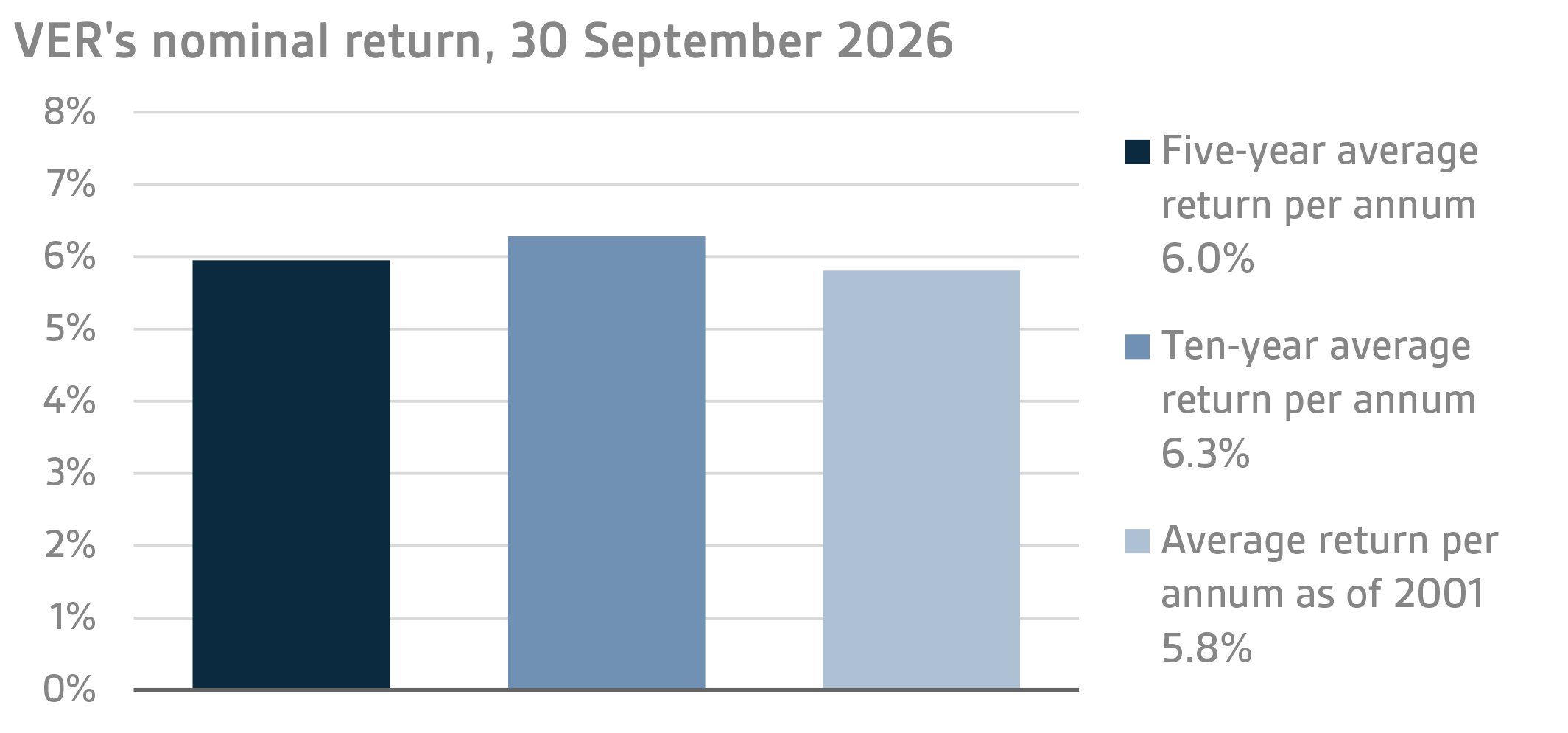
On 30 September 2026, VER’s investment assets totaled EUR 27.1 billion. During the first three quarters, the return on investments at fair values was 7.8 percent. The average nominal rate of return over the past five years (1 October 2021–30 September 2026) was 6.0 percent and the annual ten-year return 6.3 percent. Since 2001, when VER’s activities assumed their current form, the average rate of return has been 5.8 percent.
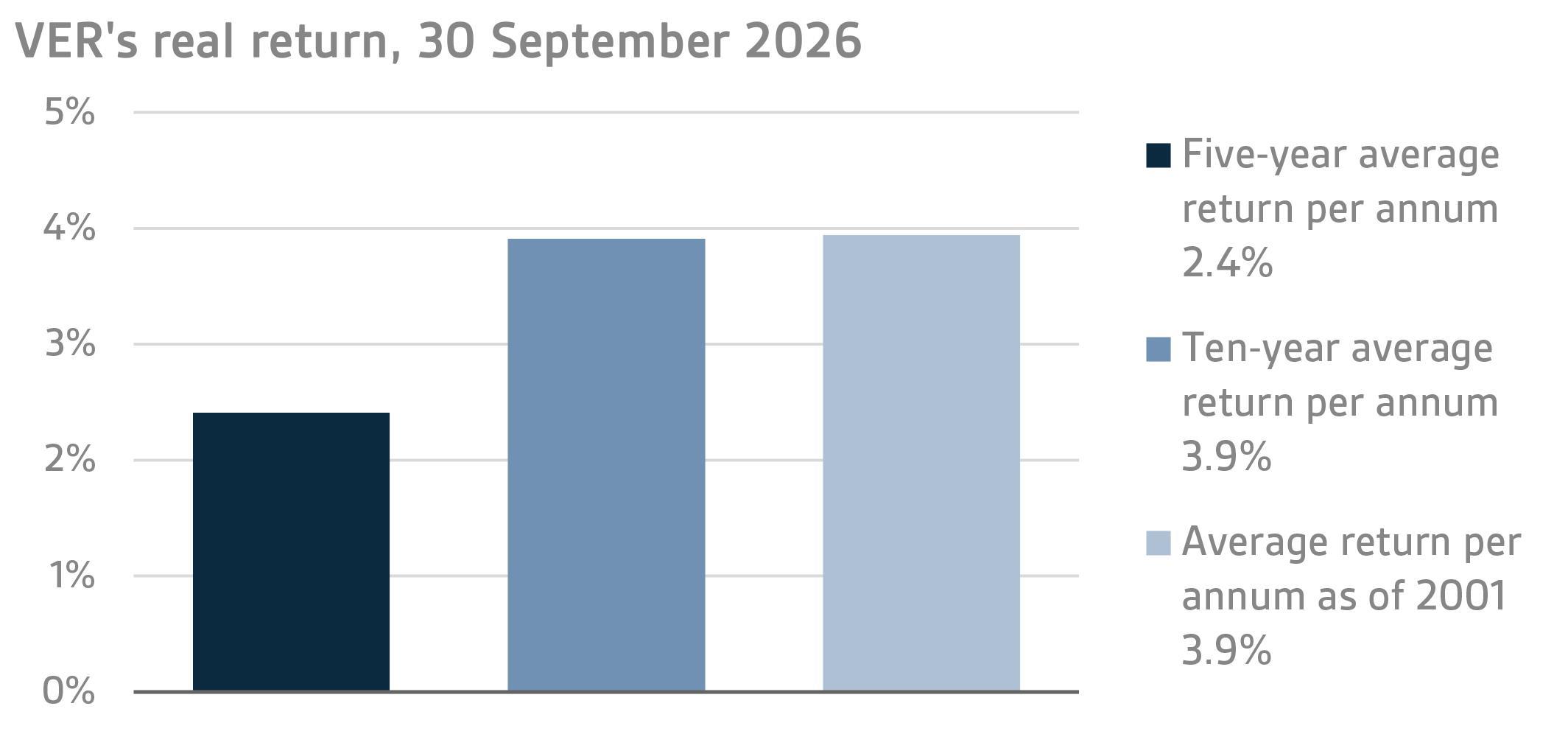
When calculating the real return on investments, the domestic consumer price index has been used as the measure of inflation. The real rate of return during the first three quarters was 5.0 percent. VER’s five-year average real return was 2.4 percent and ten-year real return 3.9 percent per year. Since 2001, when VER’s activities assumed their current form, the average real rate of return has been 3.9 percent.
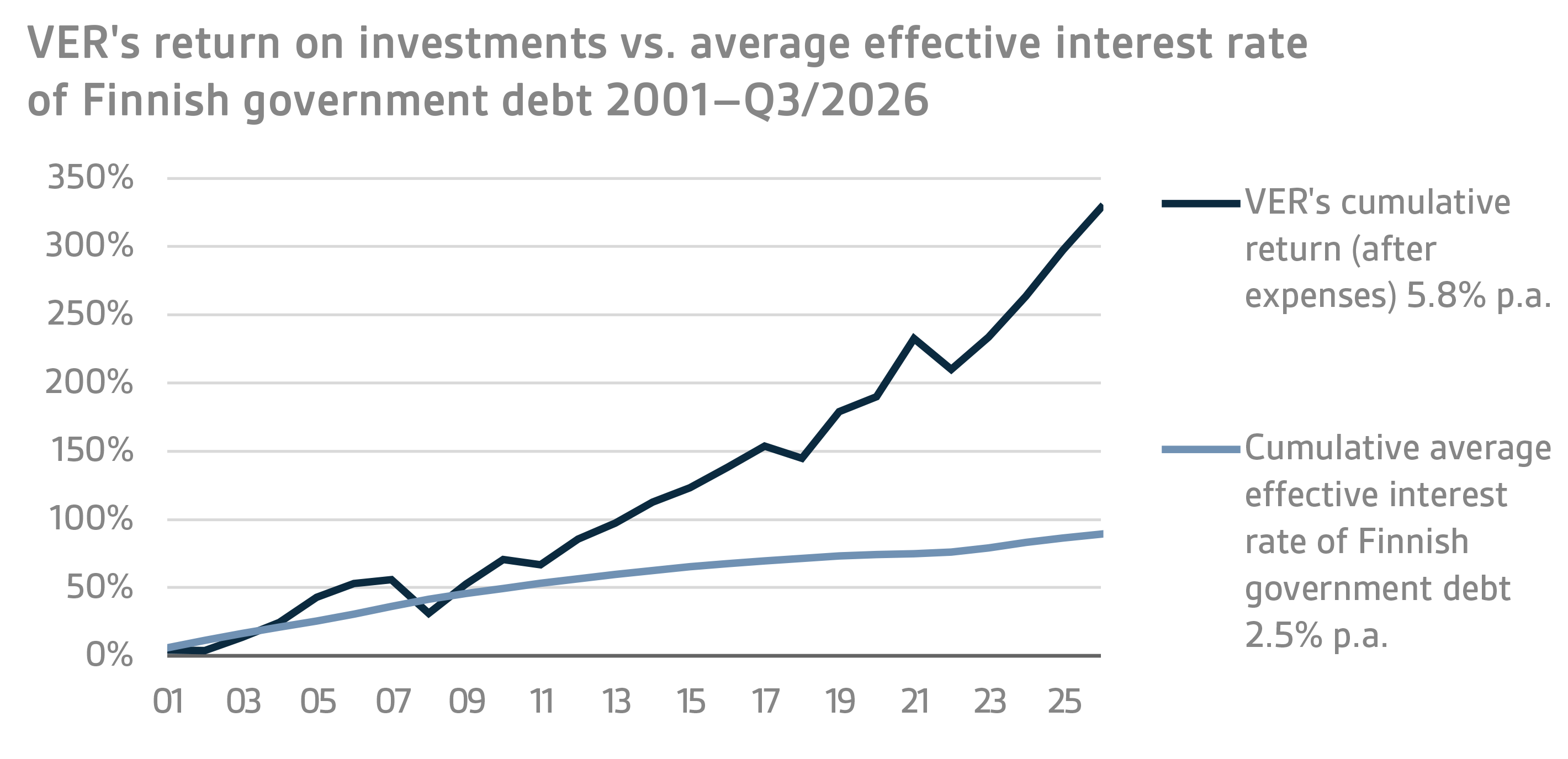
From the State’s point of view, it is pertinent to compare the return on investment with the cost of net government debt, because the funds accumulated in preparation for future pension expenditure could have been alternatively used to reduce such debt. Over the past ten years, VER’s average annual rate of return exceeded the cost of net government debt by 5.0 percentage points. Since 2001, the total market-value returns earned by VER have exceeded the cumulative average cost of equivalent government debt by about EUR 15.4 billion over the same period.
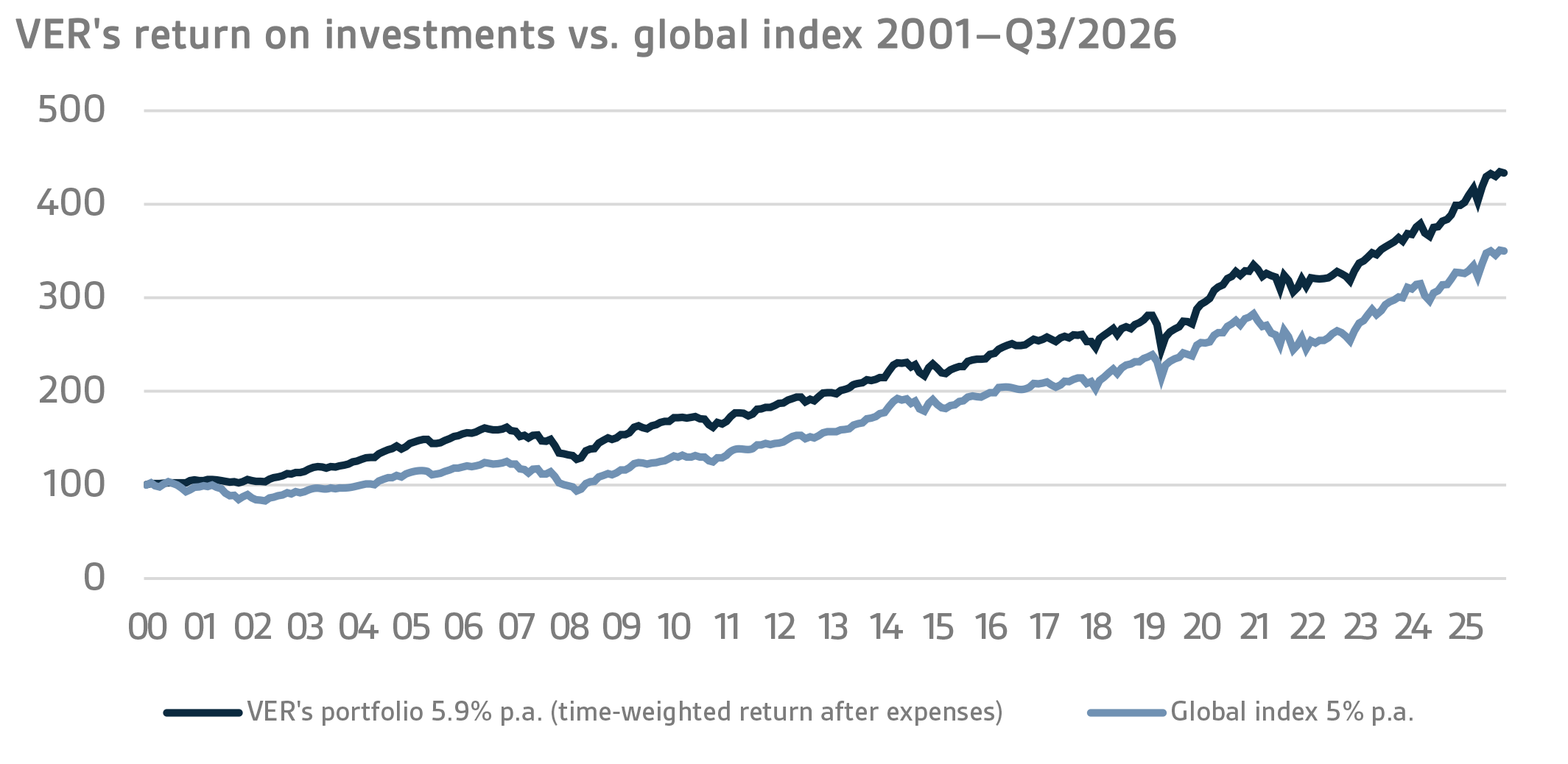
VER monitors its long-term return relative to an overall market benchmark by comparing the actual return with a global index, in which the weight of both equities and currency-hedged fixed income instruments is 50 percent.
A CLOSER LOOK AT JANUARY–SEPTEMBER 2026
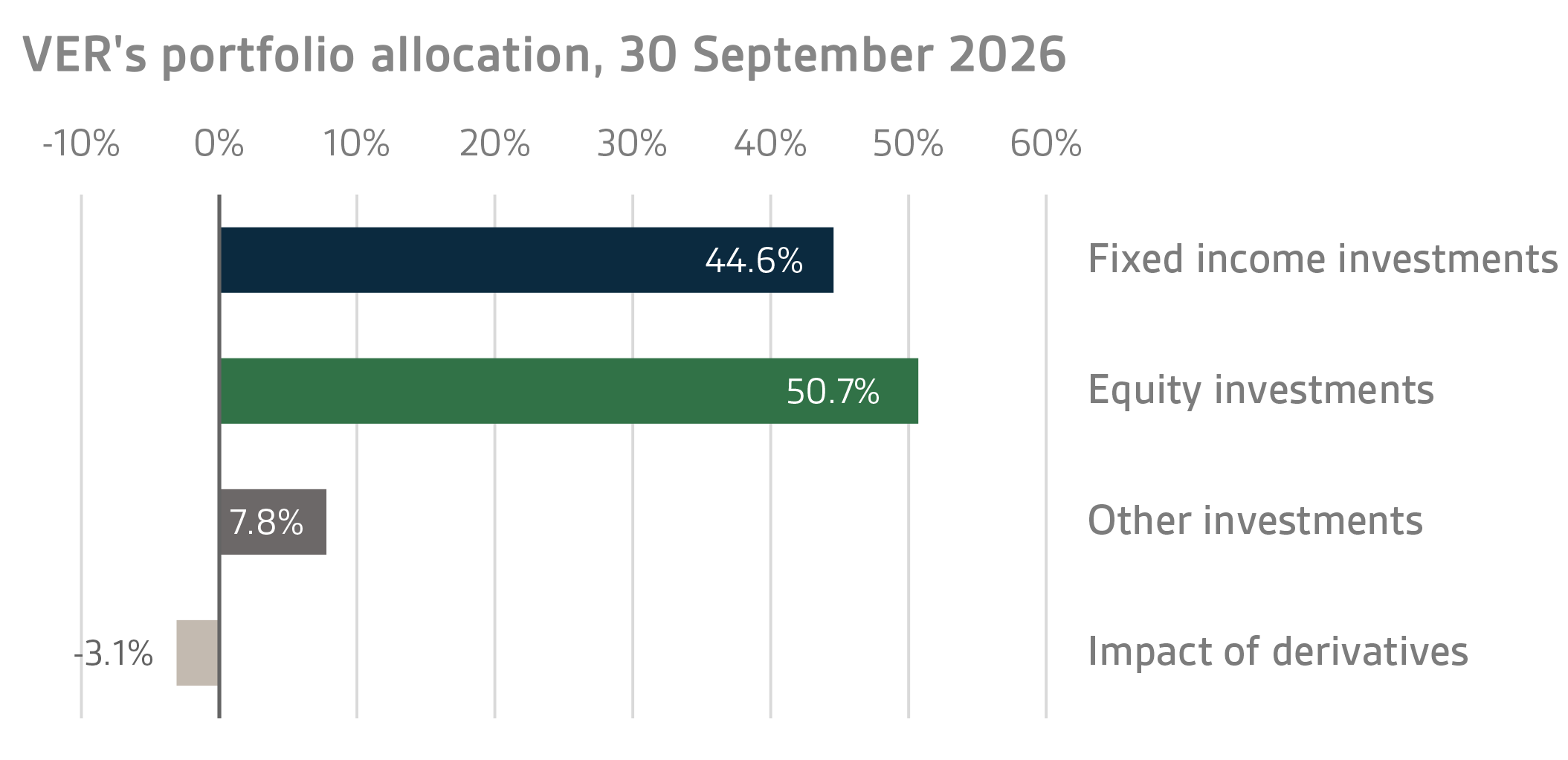
In accordance with the guidelines of the Ministry of Finance, VER’s investments are divided into fixed income investments, equities and other investments. At the end of September, fixed income instruments accounted for 44.6 percent, equities 50.7 percent and other investments 7.8 percent of the total. Of the main asset classes, liquid fixed income instruments generated a return of -0.3 percent and listed equities 17.7 percent during the first three quarters.
FIXED INCOME INVESTMENTS
Liquid fixed income investments
During the first three quarters of the year, the return on liquid fixed income investments was -0.3 percent.
The rise in interest rates seen in the first quarter of the year gave way to a decline in Europe during the second quarter, with the exception of the shortest-term Euribor rates, despite the European Central Bank’s (ECB) 25-basis-point rate hike in June. Once an agreement on a ceasefire was reached in the Middle East conflict, and the Strait of Hormuz was partially reopened to shipping, oil prices fell to pre-conflict levels and inflation expectations moderated significantly. In the third quarter, however, interest rates began to rise sharply once again, and in September, the rise in interest rates accelerated globally across maturities.
The protracted situation in the Middle East has once again pushed up oil prices and fuelled inflation fears. In September, both the ECB and the US Federal Reserve (Fed) responded to inflation fears by raising their policy rates by 25 basis points. Market pricing suggests that interest rates will be raised at least once more before the end of the year. In addition to inflation concerns, interest rates were driven up by economic growth and good employment, the scale of corporate bond issuance required for artificial intelligence investments, as well as interventions in the US government bond market and concerns about US fiscal policy. In Europe, yields of French government bonds in particular rose sharply as a result of fiscal concerns.
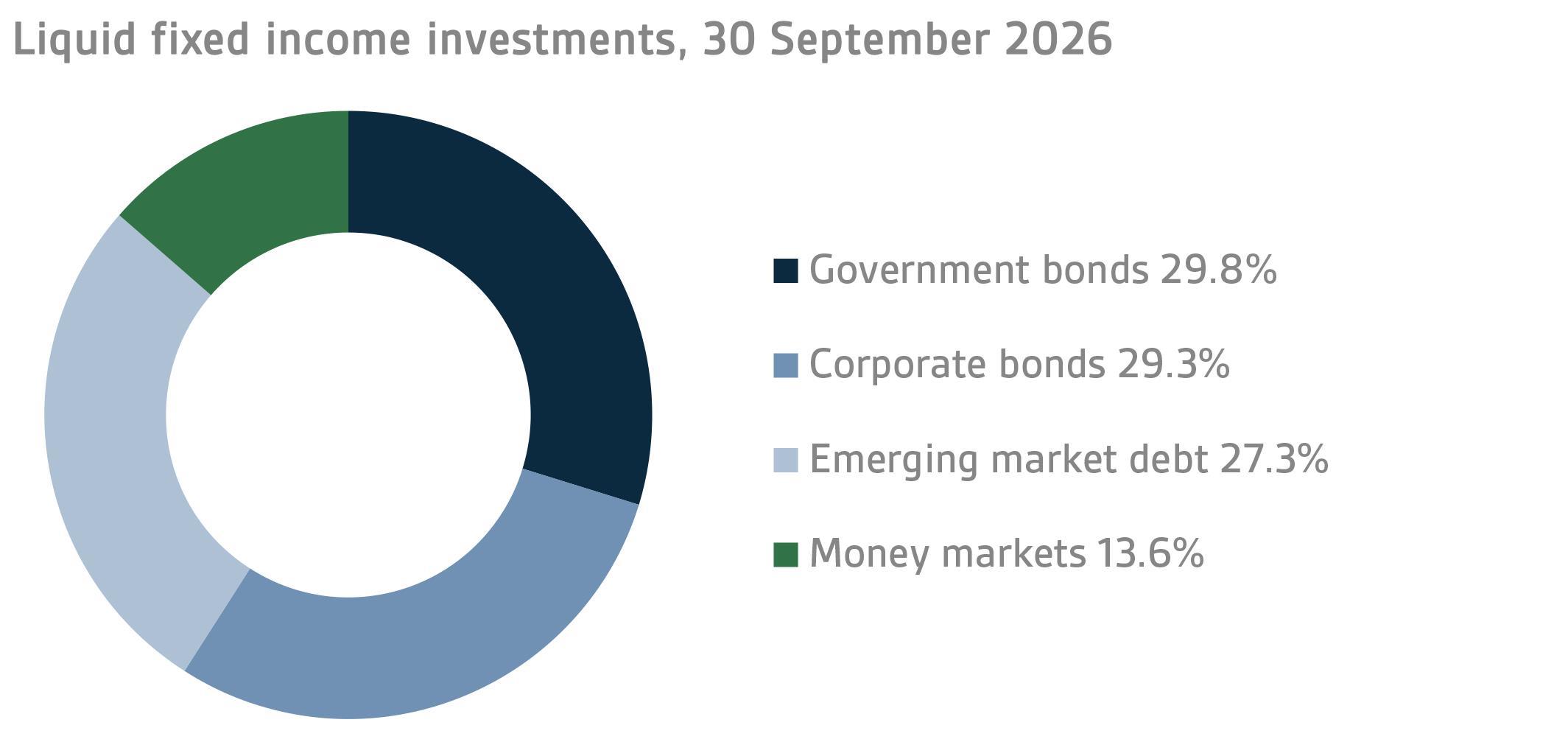
As the conflict in the Middle East continued, credit risk premiums on corporate bonds and in emerging markets rose to levels close to the highs seen at the turn of March and April. This, combined with the rise in interest rates, pushed returns on corporate bond investments into negative territory, similarly to returns on government bonds. Of VER’s liquid fixed income investments, the best returns were generated by investments in local-currency emerging market debt, where returns were excellent.
Other fixed income investments
Other fixed income investments include investments in private credit funds and direct lending to companies.
The return on other fixed income investments was 4.4 percent at the end of September. Private credit funds returned 4.2 percent and direct lending 5.1 percent.
Towards the end of the summer, the critical commentary surrounding private credit funds – which had begun in the spring – began to subside as understanding of the true nature of the risks associated with these funds grew and fears of systemic risk receded. The commentary has also had some positive consequences, as it has raised awareness of the liquidity issues in retail-facing open-ended fund structures.
This year has been a fairly good one for VER’s investments and so far, no significant problems have been observed in the portfolios. The slowdown in the private equity transaction market has had an impact on private equity funds’ ability to exit their investments, and as a result, some fund lifespans have been extended. On the other hand, strategies such as capital solutions and special situations have benefited from the difficulties faced by private equity funds, resulting in solid investment performance.
EQUITIES
Listed equities
At the end of the reporting period, the return on listed equities was 17.8 percent.
VER’s listed equities performed well in the third quarter, bringing the return since the start of the year to almost 18 percent. During the current year, the stock market has been affected by a number of uncertainties, but equities have continued to perform strongly regardless. In the early part of the year, risk sentiment fell significantly due to the war in Iran, with the result that returns were modest in the first quarter. Market sentiment improved during the second quarter, partly due to a sharp fall in oil prices, and the second quarter proved to be a very strong one in global stock markets. Returns for the third quarter were positive, and the returns on VER’s listed equities were very close to their highest level of the year at the end of the quarter.
Equities have performed extremely well over the past year, despite several risks. The war in Iran has continued, and prices of oil and petroleum products have remained high, adding to inflationary pressures. As a result, interest rates have risen significantly across the board, particularly towards the end of the third quarter, although this has not yet had a significant impact on sentiment in the stock markets. A key underlying factor has been the stronger-than-expected earnings performance of listed companies, which has led to earnings forecasts being revised upwards throughout the year. In particular, earnings forecasts for companies in the semiconductor sector have risen sharply as a result of investments in data centers linked to artificial intelligence. Earnings forecasts have improved, particularly in emerging markets and the United States, where artificial intelligence related companies account for a significant proportion of the main equity indices. Index concentration increased further during the third quarter.
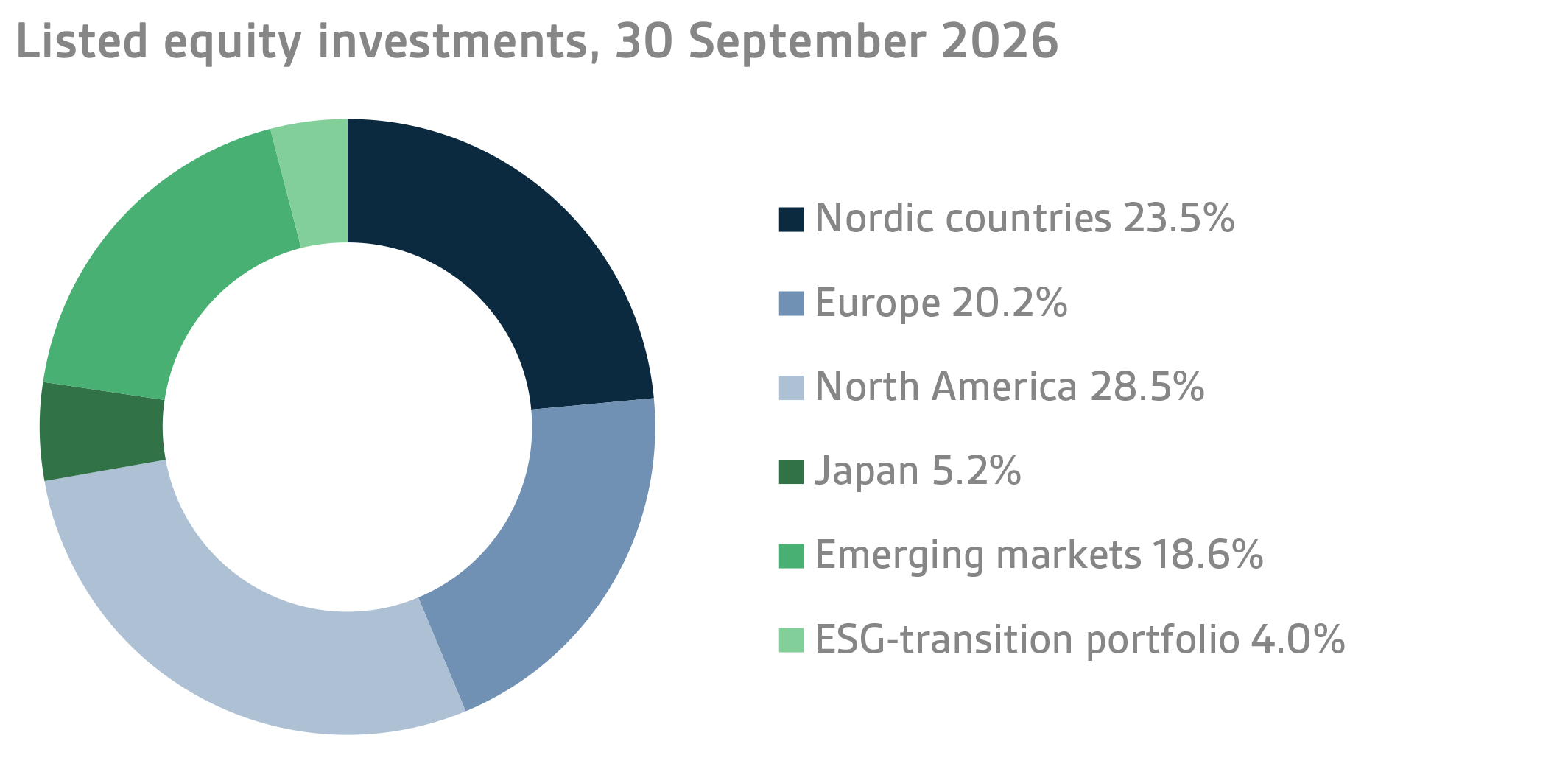
Emerging market equities delivered the best returns during the reporting period, as the share prices of major chip manufacturers rose significantly over the course of the year. The return on VER’s Japan sub-portfolio also reached an almost similar level. All sub-portfolios generated positive performance and even the weakest sub-portfolio, European equities, still managed a return of 9.9 percent.
Other equity investments
VER’s other equity investments include investments in private equity funds, infrastructure and unlisted stock.
The return on
private equity investments at the end of September was 3.7 percent, on infrastructure funds 11.0 percent and on unlisted equities 11.9 percent.
The optimism seen at the start of the year regarding a turnaround in the transaction market has subsided, and expectations for the rest of the year are fairly modest. The war in Iran and the rise in interest rates have contributed to the slowdown of the exit market. The level of new investment has also been low in relation to the amount of uncalled capital. VER’s portfolio has seen some excellent exits this year, but cash flow has nevertheless fallen short of last year’s figure.
Investments in artificial intelligence infrastructure and the resulting increase in energy demand have capitalized on recent developments in the infrastructure market across all markets. Interest in the sector amongst institutional investors has also remained high, which has made it easier for the largest fund managers in particular to raise capital.
The return on VER’s infrastructure investments at the end of September remained very strong. In portfolio funds, a significant rise in value has been seen in companies specializing in electricity transmission. Successful exits have also been made, particularly from data centers. On the other hand, returns on investments in renewable energy have fallen short of target levels, and exiting these investments has proved challenging. Overall, the outlook for the sector is positive, and rising interest rates and inflation are not expected to cause any significant problems for investments.
OTHER INVESTMENTS
VER’s other investments include investments in real estate funds, hedge funds and systematic strategies.
The return on unlisted real estate funds stood at 1.2 percent at the end of September.
The crisis in the Middle East and rising interest rates have slowed the recovery of the real estate market this year. At the start of the year, expectations were still quite optimistic, with valuations at historically quite low levels. Despite everything, there is still a sense of optimism in the air, and the final quarter of the year will reveal the impact of rising interest rates on property values. At present, the moderate positive returns are driven by the favorable trend in rental income and high property occupancy rates.
The return on hedge funds and position management derivative strategies stood at 6.2 percent at the end of the third quarter.
For hedge funds, the third quarter of the year was characterized by a highly volatile market environment. July saw a sharp rotation away from the winners of the first half of the year, particularly in the artificial intelligence and semiconductor sectors. As the quarter progressed, the markets stabilized, but the sharp rise in interest rates seen in September once again led to greater variation in fund returns. In the third quarter, the portfolio’s quantitative and CTA strategies performed best, having benefited in particular from strong trends in the fixed income, currency and commodities markets. The most challenging period was for the portfolio’s Asian funds, whose returns were particularly affected by the fading of the strong upward trend linked to the artificial intelligence theme that occurred in July.
STATE PENSION EXPENDITURE, VER’S TRANSFERS TO THE GOVERNMENT BUDGET, PENSION CONTRIBUTION INCOME AND RISK LEVEL
The role of the State Pension Fund in equalizing the government’s pension expenditure continues to grow. In 2025, the State’s pension expenditure totaled over EUR 5.6 billion while the 2026 budget foresees an expenditure of nearly EUR 5.6 billion. During 2026, VER will contribute 44.2 percent of these expenses, or approximately 2.5 billion euros, to the government budget.
By the end of September, VER had transferred EUR 1.87 billion to the government budget. Over the same period, VER’s pension contribution income totaled EUR 1.25 billion. The pension contribution income matches the forecast. VER’s net pension contribution income has now turned negative for the foreseeable future, meaning that more money is transferred from VER to the government budget than VER receives in pension contribution income. According to current estimates, this gap between budget transfers and income will continue to grow up to the mid-2030s, which will slow down the growth of the Fund and the improvement of the funding ratio. The negative cash flow is expected to continue until the 2050s.
The Act on the State Pension Fund was amended in spring 2025. Following the legislative amendment effective as of 2026 and the budget proposal, the budget transfer, relative to state pension expenditure, will be 44.2 percent in 2026, 65.7 percent in 2027, and 48 percent from 2028 onwards. If the funding ratio exceeds 25 percent for two consecutive calendar years, an additional transfer of three percentage points will be made to the government budget.
The Government submitted its latest proposal on changes to budget transfers to Parliament in October 2026. The proposed Act is intended to come into force on 1 January 2027. According to the proposal, the State Pension Fund’s share of the state’s pension expenditure would be 67.5 percent in 2027, 49.5 percent in 2028–2037 and 48 percent from 2038 onwards. At the same time, the additional transfer of three percentage points referred to in section 6(3) would be removed from the Act.
In addition, the Government has announced that Sampo Oyj’s Class A shares, worth approximately 400 million euros, will be transferred to the State Pension Fund by the end of 2026. The share transfer will partly offset the increase in budgetary transfers to the State.
According to VER’s assessment, as a result of the budget transfers that have been decided and proposed, VER’s risk level will be lower than previously planned, which will have a negative impact on the fund’s expected returns. The goal of the Fund is to set the risk level of VER’s investments so that future budget transfers can be secured with a high degree of probability.
|
KEY FIGURES
|
|
|
|
|
30.9.2026
|
31.12.2025
|
30.9.2025
|
|
Investments, MEUR (market value)
|
27,121
|
25,760
|
25,123
|
|
Fixed income investments
|
12,089
|
10,110
|
9,776
|
|
Equity investments
|
13,758
|
14,330
|
13,791
|
|
Other investments
|
2,111
|
2,045
|
2,026
|
|
Impact of derivatives
|
-837
|
-725
|
-469
|
|
|
|
|
|
Breakdown of the investment portfolio
|
|
|
|
|
Fixed income investments
|
44.6%
|
39.2%
|
38.9%
|
|
Equity investments
|
50.7%
|
55.6%
|
54.9%
|
|
Other investments
|
7.8%
|
7.9%
|
8.1%
|
|
Impact of derivatives
|
-3.1%
|
-2.8%
|
-1.9%
|
|
|
|
|
|
1.1.-
30.9.2026
|
1.1.-
31.12.2025
|
1.1.–
30.9.2025
|
|
Return on investments
|
7.8%
|
9.3%
|
5.8%
|
|
Fixed income investments
|
|
|
|
|
Liquid fixed income investments
|
-0.3%
|
4.3%
|
3.4%
|
|
Private Credit funds
|
4.2%
|
4.8%
|
3.5%
|
|
Direct lending
|
5.1%
|
2.5%
|
2.4%
|
|
Equity investments
|
|
|
|
|
Listed equity investments
|
17.8%
|
15.4%
|
9.1%
|
|
Private Equity investments
|
3.7%
|
2.8%
|
0.5%
|
|
Infrastructure funds
|
11.0%
|
5.7%
|
2.6%
|
|
Unlisted equity investments
|
11.9%
|
28.6%
|
23.3%
|
|
Other investments
|
|
|
|
|
Unlisted Real Estate funds
|
1.2%
|
0.1%
|
0.1%
|
|
Hedge funds and systematic strategies
|
6.2%
|
11.3%
|
7.5%
|
|
|
|
|
|
Pension contribution income, MEUR
|
1,249
|
1,656
|
1,257
|
|
Transfer to state budget, MEUR
|
1,872
|
2,350
|
1,767
|
|
Net contribution income, MEUR
|
-623
|
-695
|
-510
|
|
Pension liability, BnEUR
|
|
98
|
|
|
Funding ratio, %
|
|
26.5%
|
|
Additional information: Additional information is provided by Chief Executive Officer Antti Suhonen, firstname.lastname@ver.fi, tel. +358 295 201 229
Established in 1990, the State Pension Fund (VER) is an off-budget fund through which the State prepares to finance future pensions and equalize pension expenditure. VER is an investment organization responsible for investing the State’s pension assets professionally. At the end of September 2026, the market value of the Fund’s investment portfolio stood at EUR 27.1 billion.
All figures presented in this interim report are preliminary and unaudited.