VER’s return on investment 7.6% during 1 Jan–30 June 2026; ten-year average annual return 6.6%
Published 2026-08-18 at 16:07
INVESTMENT ENVIRONMENT
Market trends in the first half of 2026 were driven by geopolitics and themes related to artificial intelligence and technology investments. Markets recovered quickly from the uncertainty caused by the conflict in Iran that began in February, and thanks to strong performance in the second quarter, the first half of the year ultimately turned out to be quite favorable, especially for equity investors. Emerging stock markets posted particularly strong gains, though these were largely driven by a handful of individual semiconductor companies.
In Europe, interest rates rose in the wake of the conflict in the Middle East, but in the second quarter — with the exception of the shortest-term rates — they returned to levels close to those at the beginning of the year, supported by news of a ceasefire. In the United States, interest rates have been rising throughout the first half of the year, and the markets expect the Federal Reserve to raise its benchmark rate further during the autumn.
So far, the crisis in the Middle East has slowed global economic growth less than previously expected, and corporate earnings reports in the first half of the year generally exceeded market expectations. Hence, economic fundamentals provide the conditions for continued positive market performance. At the same time, ongoing inflation concerns and the resulting rise in interest rates, elevated stock valuations, strong interest among retail investors in leveraged equity investments, the dominance of the technology sector, and the financing needs of artificial intelligence investments are raising legitimate questions about possible market overheating.
VER’S RETURN ON INVESTMENTS
The focus of the monitoring and evaluation of the State Pension Fund’s investment activities is on long-term outcomes and future prospects instead of quarterly reporting. However, VER will continue to post quarterly performance figures and comments.
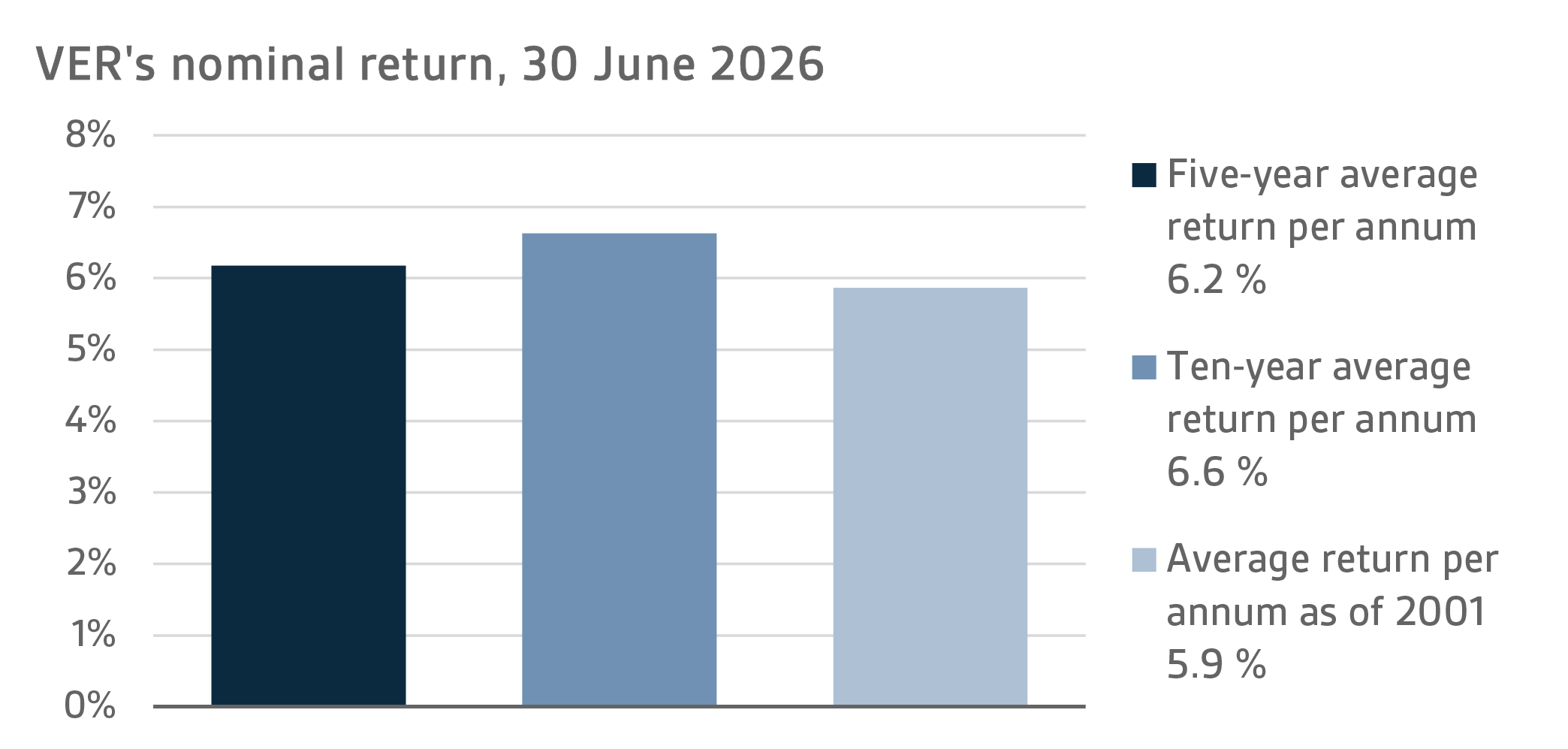
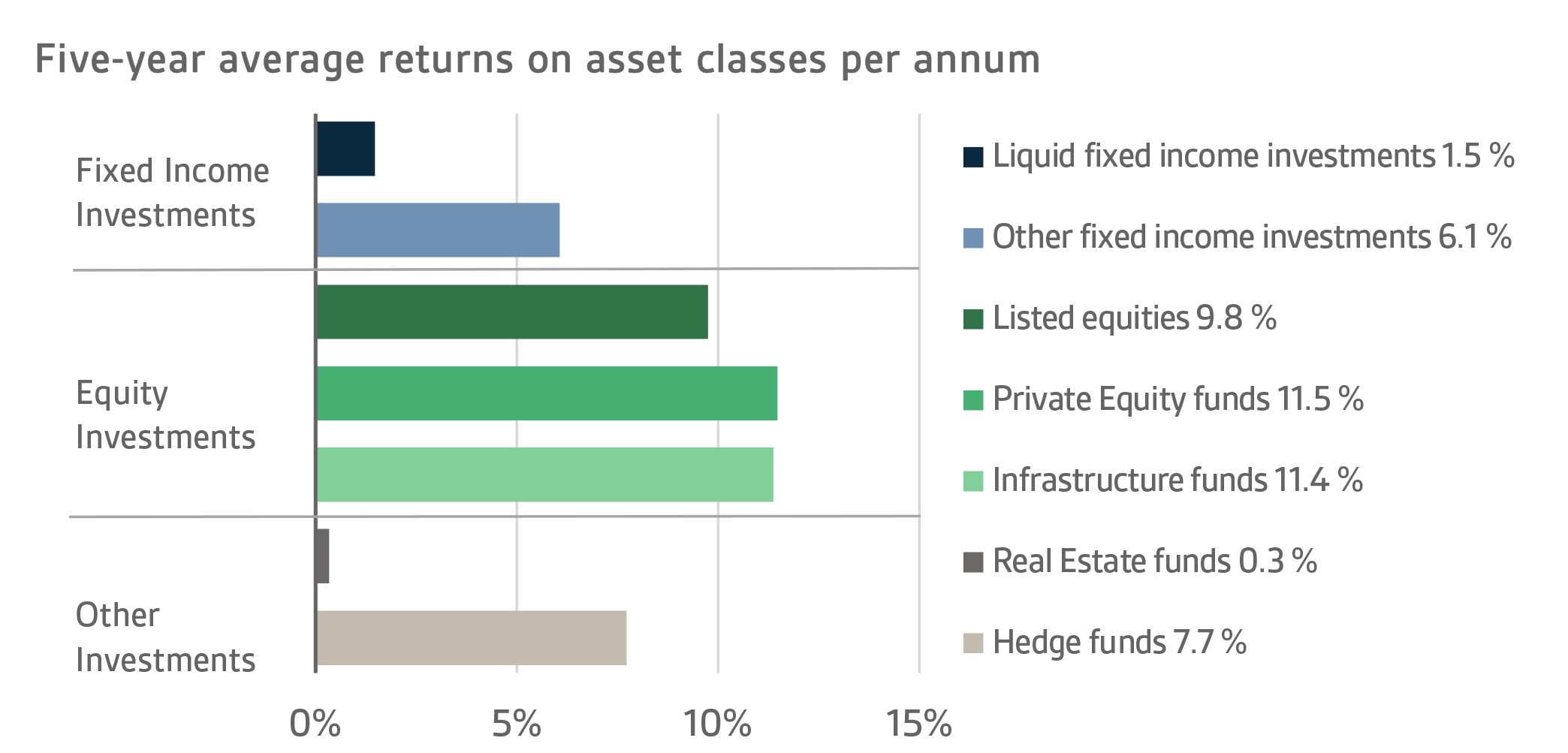
On 30 June 2026, VER’s investment assets totaled EUR 27.3 billion. During the first half of the year, the return on investments at fair values was 7.6 percent. The average nominal rate of return over the past five years (1 July 2021–30 June 2026) was 6.2 percent and the annual ten-year return 6.6 percent. Since 2001, when VER’s activities assumed their current form, the average rate of return has been 5.9 percent.
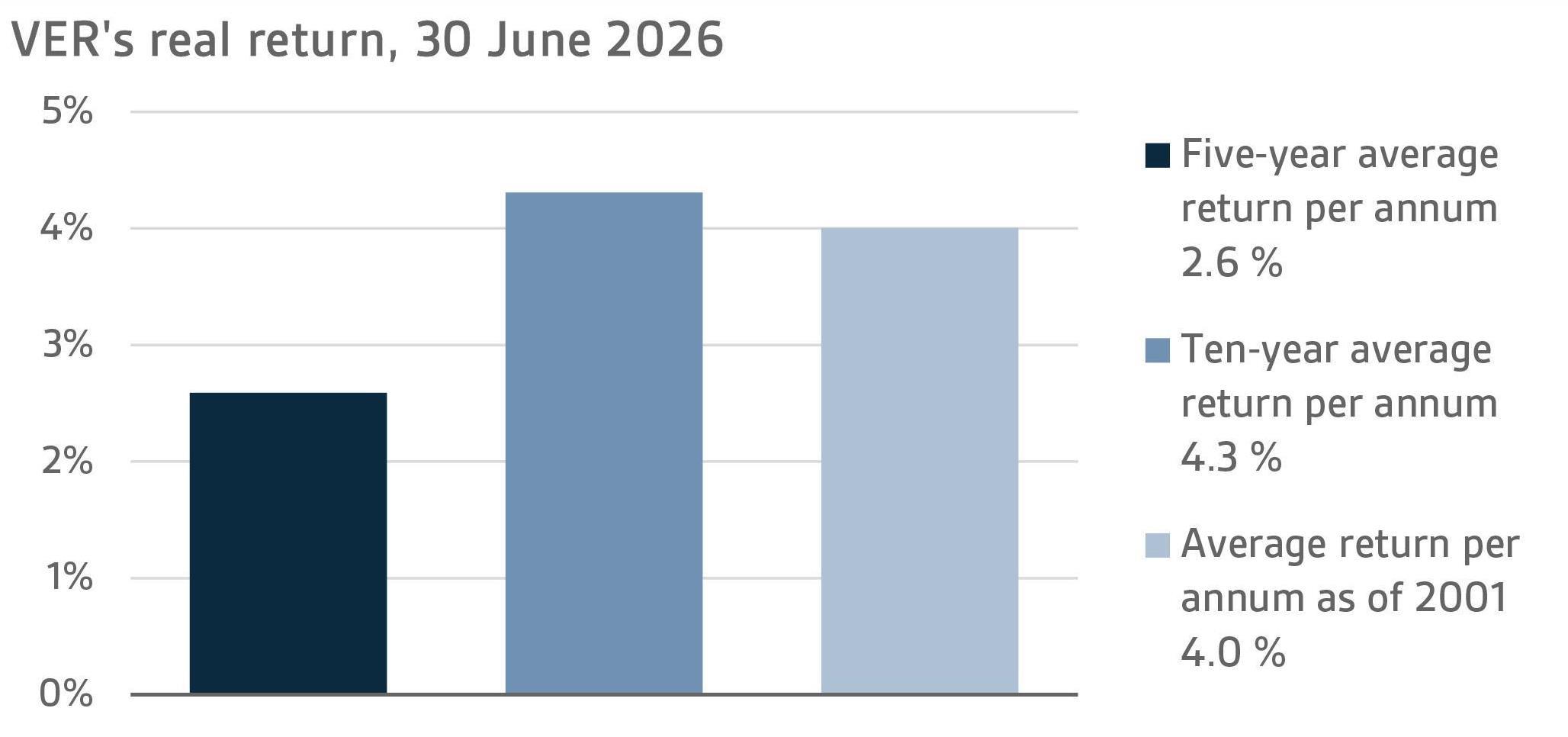
When calculating the real return on investments, the domestic consumer price index has been used as the measure of inflation. The real rate of return during the first half of 2026 was 5.6 percent. VER’s five-year average real return was 2.6 percent and ten-year real return 4.3 percent p.a. Since 2001, when VER’s activities assumed their current form, the average real rate of return has been 4.0 percent.
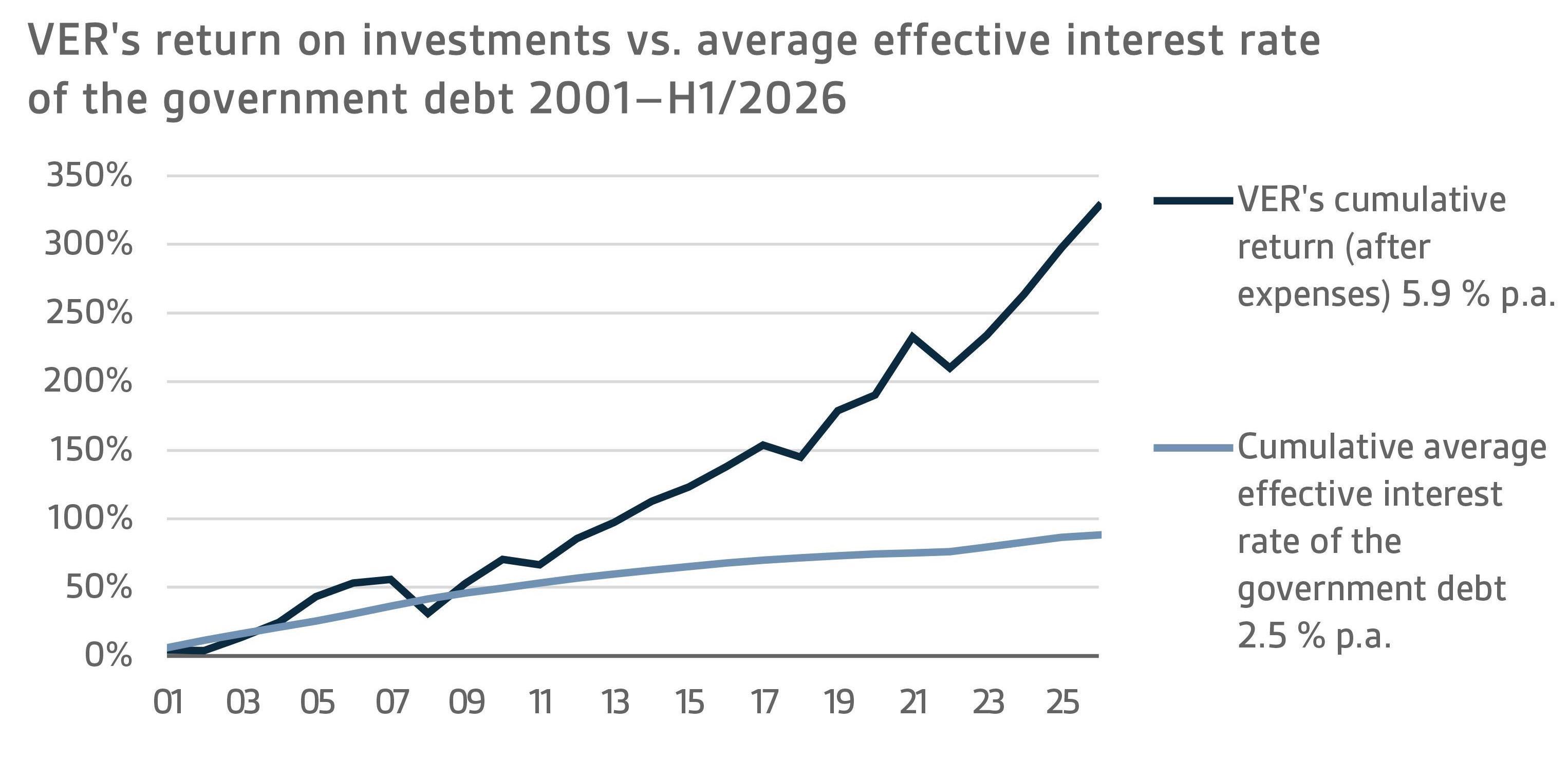
From the State’s point of view, it is pertinent to compare the return on investments with the cost of net government debt, because the funds accumulated in preparation for future pension expenditure could have been alternatively used to reduce such debt. Over the past ten years, VER’s average annual rate of return exceeded the cost of net government debt by 5.4 percentage points. Since 2001, the total market-value returns earned by VER have exceeded the cumulative average cost of equivalent government debt by about EUR 15.4 billion over the same period.
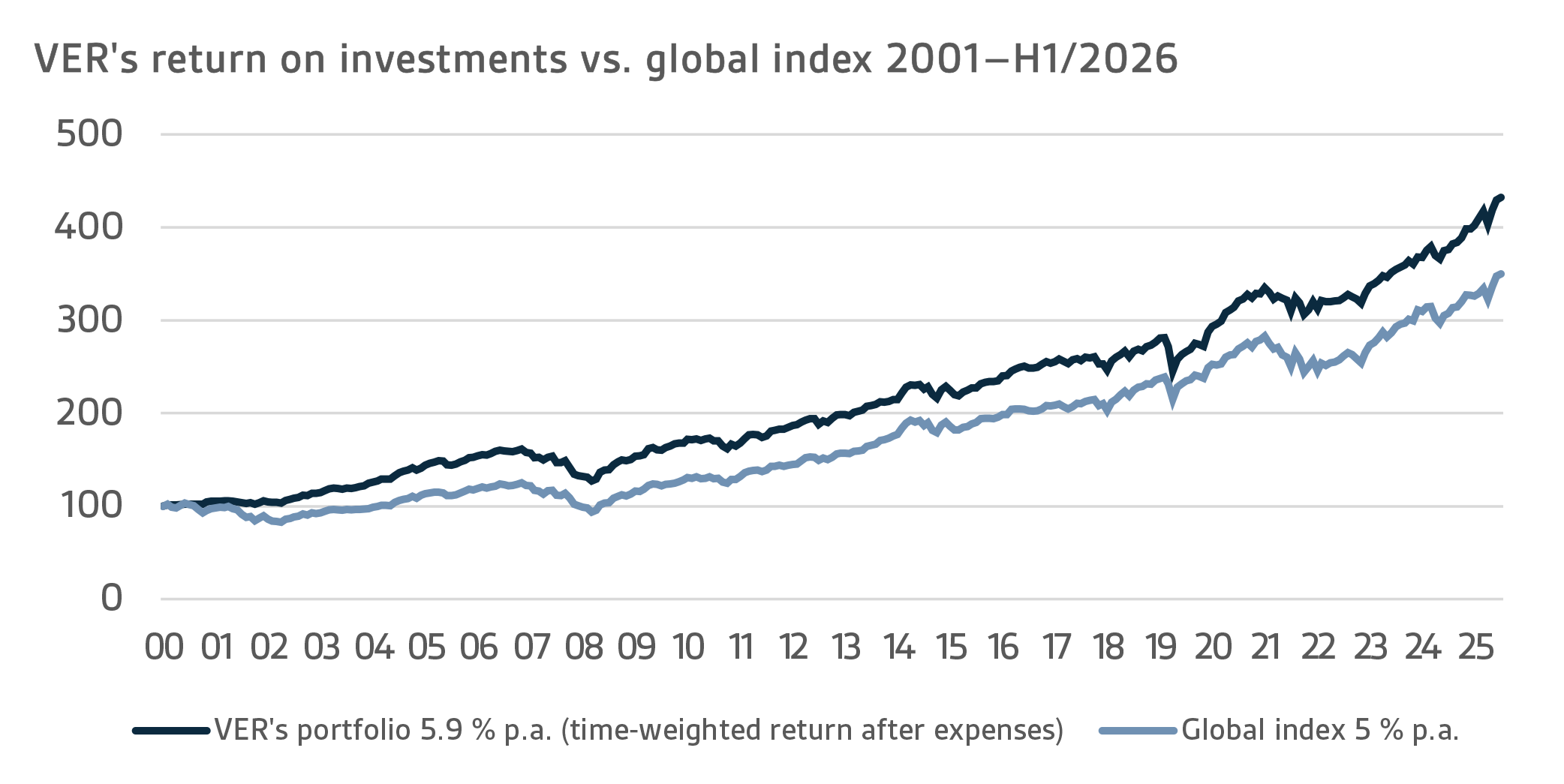
VER monitors its long-term return relative to an overall market benchmark by comparing the actual return with a global index, in which the weight of both equities and currency-hedged fixed income instruments is 50 percent.
DETAILED REVIEW OF JANUARY–JUNE 2026
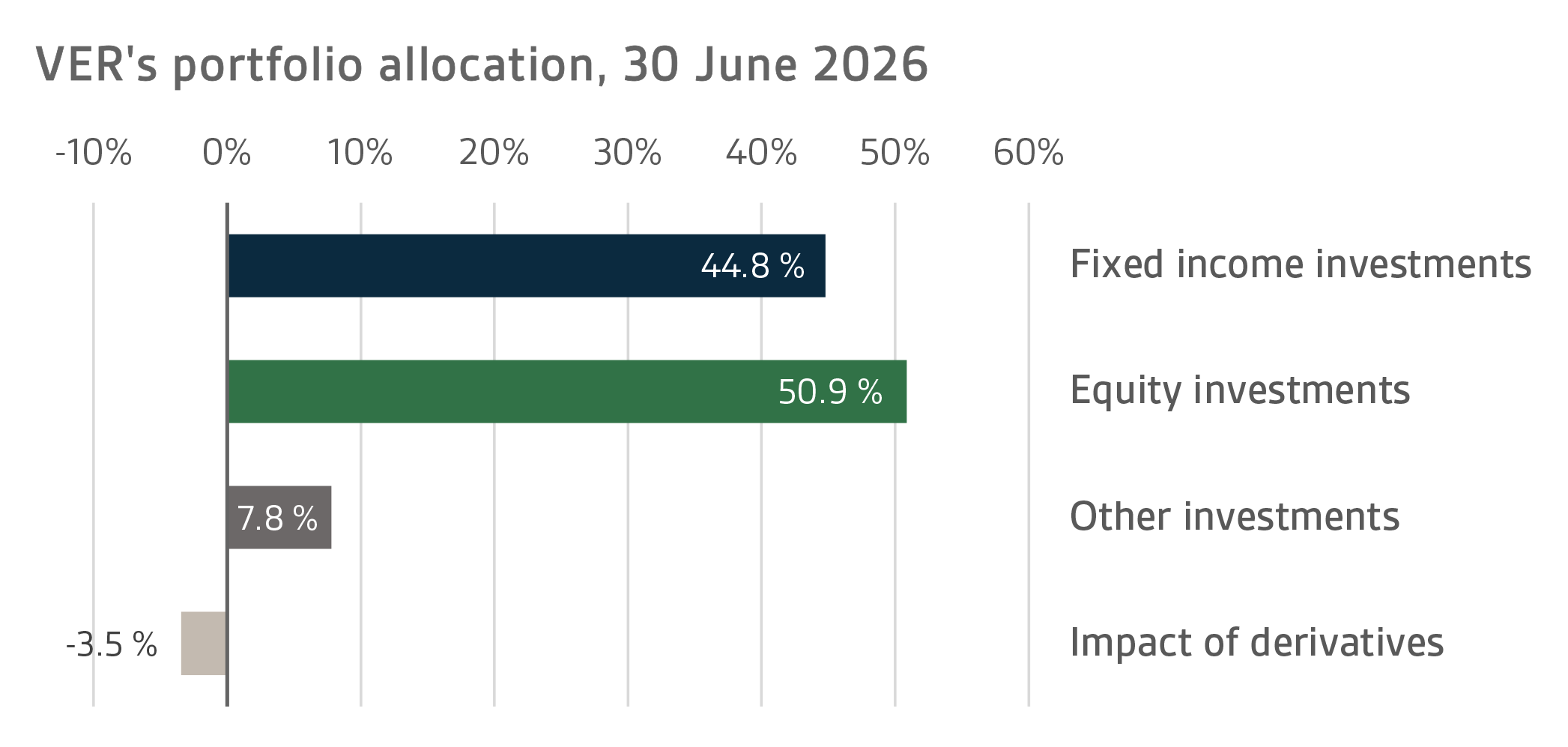
In accordance with the guidelines of the Ministry of Finance, VER’s investments are divided into fixed income investments, equities and other investments. At the end of June, fixed income investments accounted for 44.8 percent, equities 50.9 percent and other investments 7.8 percent of the total. Of the main asset classes, liquid fixed income instruments generated a return of 1.8 percent and listed equities 15.4 percent during the first quarter of the year.
FIXED INCOME INVESTMENTS
Liquid fixed income investments
The return on liquid fixed income was 1.8 percent.
The rise in interest rates seen in the first quarter of the year gave way to a decline in Europe during the second quarter, with the exception of the shortest-term Euribor rates, despite the European Central Bank’s 25-basis-point rate hike in June. Once an agreement on a ceasefire was reached in the Middle East conflict, and the Strait of Hormuz was partially reopened to shipping, oil prices fell to pre-conflict levels and inflation expectations moderated significantly.
In the United States, interest rates continued to rise in the wake of the Federal Reserve’s June policy meeting — which was more hawkish than expected — and the comments made by the new Chairman, Kevin Warsh. The FED's interest rate projections for this year shifted from rate cuts to rate hikes, with the median projection indicating a 25-basis-point rate increase by the end of the year.
At the end of June, the bond market was still pricing in one more 25-basis-point rate hike by the ECB and about one and a half 25-basis-point rate hikes by the FED. Since the end of the first quarter, ECB expectations have shifted down by one rate hike, while expectations regarding the Fed have shifted clearly from unchanged to a rate hike.
As the conflict in the Middle East eased, credit risk premiums on corporate bonds and emerging markets returned to roughly pre-crisis levels. Thanks to relatively high current returns and narrowing risk premiums, returns were particularly strong during the second quarter, especially on local-currency investments in emerging market debt.
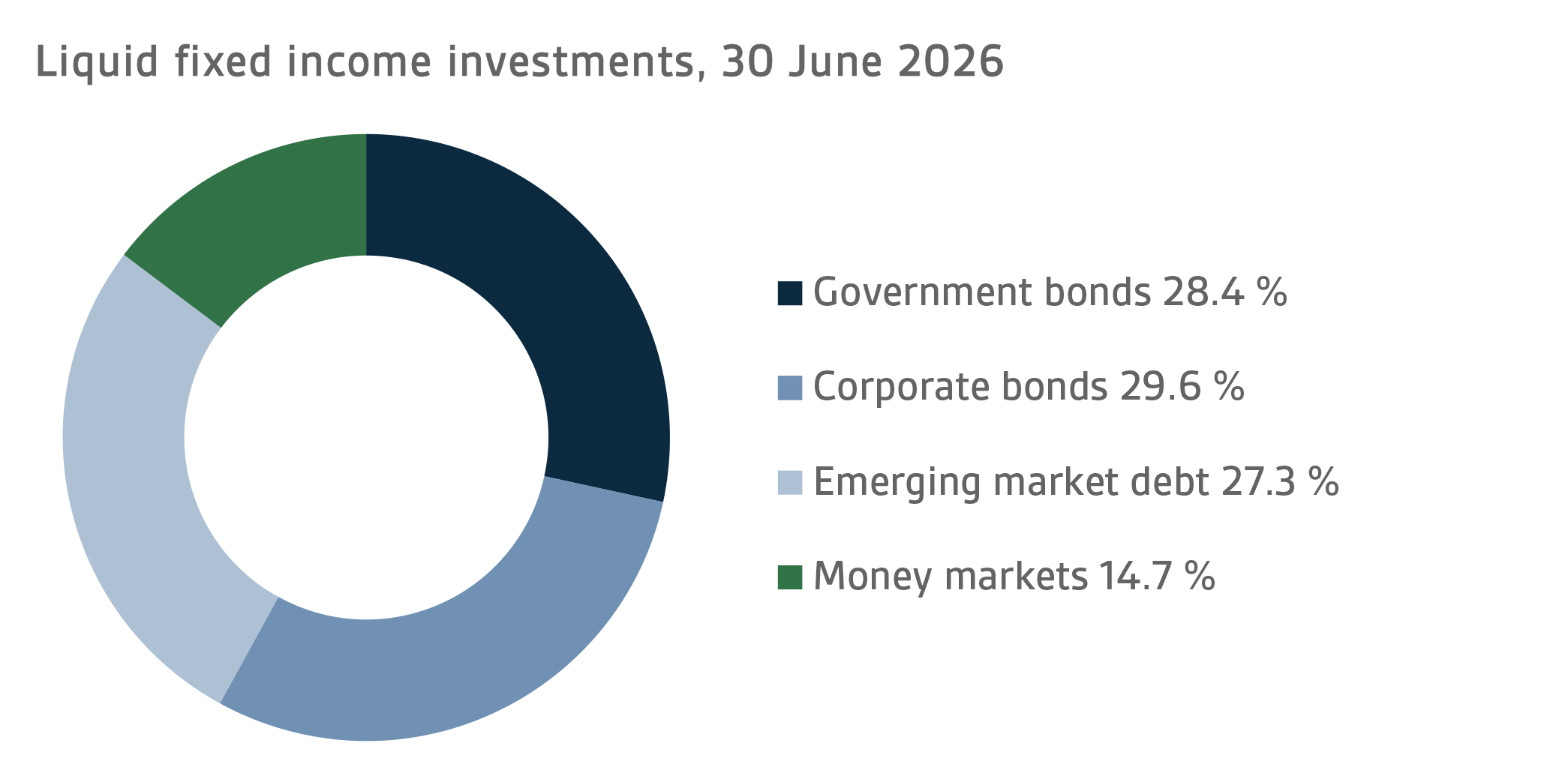
Among VER’s liquid fixed income investments, the best returns came from investments in emerging bond markets, but returns in other fixed income asset classes also performed well in the second quarter, and returns have been clearly positive since the beginning of the year.
Other fixed income investments
Other fixed income investments include investments in private credit funds and direct lending to companies.
During the first half of the year, the return on liquid fixed income instruments was 2.8 percent. Private credit funds returned 2.7 percent and direct lending 3.9 percent.
Discussions surrounding the private credit market continued throughout the spring. Concerns about the future of software companies were a hot topic in both the press and among investors, and private credit funds with software companies in their portfolios suffered as a result of investors’ reactions. However, as the summer approached, the tone of the headlines began to change as understanding of the true risks of private credit investments grew. As institutional investors remained fairly calm throughout, they did not make any significant redemptions from open-end funds.
So far, there have been hardly any issues within VER's portfolio, and the managers have mostly been puzzled by the nature of the media headlines. Since the proportion of software companies in the portfolios is quite modest, the main cause for concern is the continued relatively low volume of LBO transactions. Private equity funds are having trouble exiting their portfolio companies because of investments made in a zero-interest-rate environment where the original return target cannot be met under current interest rate conditions. However, private credit managers have reasonably positive expectations for the rest of the year, as there is still a significant amount of uncalled capital remaining in private equity funds, and managers will need to invest a substantial portion of it over the next two years.
EQUITIES
Listed equities
During the first
half of the year, the return on listed equities was 15.4 percent.
VER's listed equity investments performed very well in the second quarter, even though the return was only slightly positive at the end of the first quarter. The year got off to a brisk start in the stock market, but first-quarter returns were weighed down by the significant uncertainty caused by the war in Iran that broke out in late February. Both oil prices and interest rates rose sharply in the wake of these events, and the stock market saw a widespread decline during March. During the second quarter, however, the market recovered, and although oil prices remained high until mid-May, when they started to decline, global stock markets saw a broad rally right from the start of the quarter.
The first-quarter results and outlooks announced by publicly traded companies were generally better than expected, and this strongly supported the positive performance of stocks. Earnings forecasts continued to rise throughout the second quarter, and earnings forecasts for companies in the semiconductor sector, in particular, were raised significantly on the back of excellent results and major planned data center investments driven by the artificial intelligence boom. Most chip manufacturers’ stock prices rose sharply during the first half of the year, and this helped propel the South Korean stock market, for example, to a gain of over 100 percent in the first half of the year. However, there was also some rotation in stock market themes, and in the U.S. stock market, for example, the returns of some of the so-called MAG7 companies — which had performed exceptionally well in recent years — lagged significantly behind the overall index performance during the first part of the year.
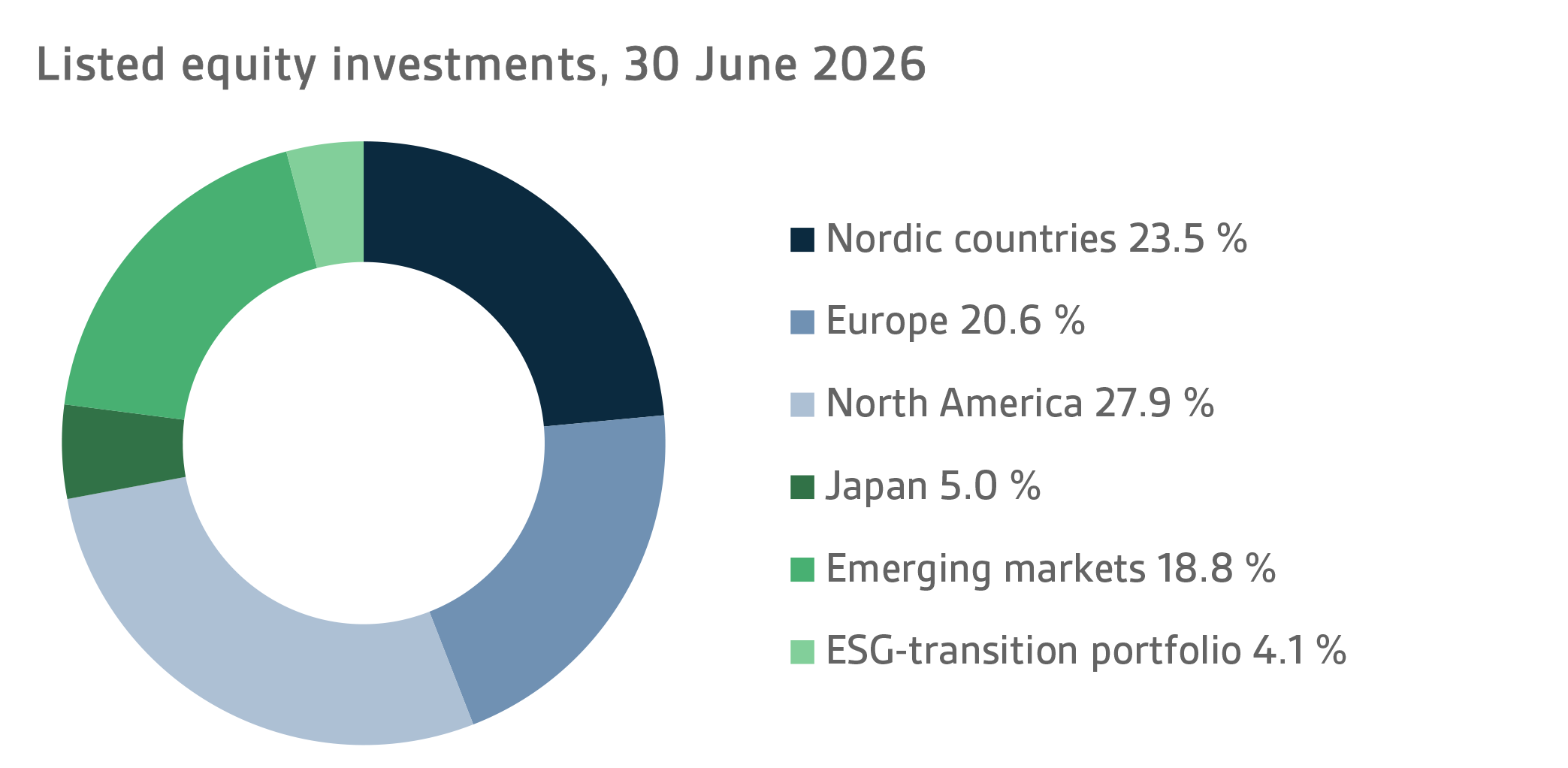
Despite all the volatility and uncertainties, the first half of the year was an excellent period for listed stocks, and all sub-portfolios posted clearly positive returns. By far the best returns were delivered by VER's investments in emerging markets, with returns rising to nearly 30 percent as major chip manufacturers saw sharp increases in their stock prices. Similarly, investments in Japan generated a very strong return of about 20 percent. During the reporting period, investments in the Nordic countries posted the weakest returns, weighed down by poorly performing small-cap funds, but even those returns reached nearly 10 percent.
Other equity investments
VER’s other equity investments include investments in private equity funds, infrastructure and unlisted stock.
Private equity invest
ments returned 1.8 percent, infrastructure funds 8.8 percent and unlisted equities 7.2 percent during the first half of the year.
As 2026 began, expectations in the private equity market were optimistic. The transaction market, which had been quiet for a long time, showed signs of picking up in the second half of 2025, and hopes were high that the positive trend would continue into the current year. However, the Iran crisis that began in the spring has once again led to increased uncertainty, which has slowed down exits and new investments. However, private equity funds have a record amount of uninvested capital, while the holding periods for companies in their portfolios are at record highs. These factors are expected to prompt the funds to take further action, both in exits and in making new investments, as early as the second half of this year. VER's portfolio has seen some excellent exits this year, even though cash flows have fallen short of 2025 levels.
Infrastructure investments have been among the winners in the current market environment. The growing need for energy self-sufficiency, particularly in Europe, and investments in artificial in
telligence infrastructure are supporting the growth of the asset class across all markets. Also, investor interest in the asset class has remained high. VER's infrastructure portfolio once again posted a solid return in the first half of the year. Fund returns were strong across the board, but returns from funds investing in the United States, in particular, were excellent.
OTHER INVESTMENTS
VER’s other investments include investments in real estate funds, hedge funds and systematic strategies.
The return on unlisted real estate funds in the first half of the year was 1.1 percent.
After several years of negative sentiment in the real estate market, a rebound was expected this year. The Middle East crisis and potential interest rate hikes by central banks have once again increased uncertainty in the real estate market. Since valuations are believed to be at rock bottom, there is a sense of optimism in the air, and VER’s real estate portfolio posted a positive return in the first half of the year. One factor supporting the real estate market is the limite
d amount of new space being built, which enables favorable growth in rental income and high occupancy rates. In addition, access to debt financing has improved compared to recent years.
Hedge funds and derivative strategies for position management generated a return of 6.9 percent in the first half of the year.
The second quarter of the year was a very strong one for hedge funds as the markets rebounded from the sharp decline in March. This was driven by a partial easing of geopolitical concerns and better-than-expected results from technology companies. Among the funds, the strategies linked to equity risk generated the best returns, benefiting from the acceleration in M&A activity. The reporting period was the most challenging for quantitative strategies and macro funds, whose returns continue to be weighed down by the losses suffered in the fixed income and commodity markets during the March turbulence.
STATE PENSION EXPENDITURE, VER’S TRANSFERS TO THE GOVERNMENT BUDGET, PENSION CONTRIBUTION INCOME AND RISK LEVEL
The role of the State Pension Fund in equalising the State’s pension expenditure continues to grow. In 2025, the State’s pension expenditure totalled EUR 5.6 billion while the 2026 budget foresees an expenditure of over EUR 5.6 billion. During 2026, VER will contribute 44.2 percent of these expenses, or approximately 2.5 billion euros, to the government budget.
By the end of June, VER had transferred EUR 1.25 billion to the government budget. Over the same period, VER’s pension contribution income totalled EUR 0.85 billion. The pension contribution income matches the forecast. VER’s net pension contribution income has now turned negative for the foreseeable future, meaning that clearly more money is transferred from VER to the government budget than VER receives in pension contribution income. According to current estimates, this gap between budget transfers and income will continue to grow up to the mid-2030s, which will slow down the growth of the Fund. The negative cash flow is expected to continue until the 2050s.
The Act on the State Pension Fund was amended in 2025. At the mid-year review in spring 2025, it was proposed that the budget transfer be increased by 1.2 percentage points, so that by 2028 the transfer would amount to 46.2 percent of pension expenditures. Additionally, it was also proposed that the 2027 budget transfer be increased on a one-time basis, bringing the budget transfer to 63.9 percent of the State’s annual pension expenditure. These amendments were signed into a law effective as of 1 January 2026. In addition to the increases mentioned above, the budget negotiations in the autumn of 2025 proposed a permanent increase in the budget transfers, which is estimated to be 1.8 percentage points starting in 2027. Following the legislative amendment that took effect at the beginning of 2026 and the budget proposal, the budget transfer will be 44.2 percent in 2026, and would be 65.7 percent in 2027 and, as of 2028, 48 percent relative to the total State pension expenditure. Additionally, if the funding ratio exceeds 25 percent for two consecutive calendar years, an additional transfer of three percentage points will be made to the government budget.
According to VER’s assessment, as a result of the budget transfers that have been decided and proposed, VER’s risk level will be lower than previously planned, which will have a negative impact on its expected return. The goal of the Fund is to set the risk level of VER's investments so that future budget transfers can be secured with a high degree of probability.
|
KEY FIGURES
|
|
|
|
|
30.6.2026
|
31.12.2025
|
30.6.2025
|
|
Investments, MEUR (market value)
|
27 251
|
25 760
|
24 452
|
|
Fixed income investments
|
12 205
|
10 110
|
9 278
|
|
Equity investments
|
13 861
|
14 330
|
13 147
|
|
Other investments
|
2 127
|
2 045
|
2 012
|
|
Impact of derivatives
|
-941
|
-725
|
16
|
|
|
|
|
|
Breakdown of the investment portfolio
|
|
|
|
|
Fixed income investments
|
44.8%
|
39.2%
|
37.9%
|
|
Equity investments
|
50.9%
|
55.6%
|
53.8%
|
|
Other investments
|
7.8%
|
7.9%
|
8.2%
|
|
Impact of derivatives
|
-3.5%
|
-2.8%
|
0.1%
|
|
|
|
|
|
1.1.-
30.6.2026
|
1.1.-
31.12.2025
|
1.1.-
30.6.2025
|
|
Return on investment
|
7.6%
|
9.3%
|
2.5%
|
|
Fixed income investments
|
|
|
|
|
Liquid fixed income investments
|
1.8%
|
4.3%
|
2.1%
|
|
Private Credit funds
|
2.7%
|
4.8%
|
1.4%
|
|
Direct lending
|
3.9%
|
2.5%
|
1.2%
|
|
Equity investments
|
|
|
|
|
Listed equity investments
|
15.4%
|
15.4%
|
2.8%
|
|
Private Equity investments
|
1.8%
|
2.8%
|
0.5%
|
|
Infrastructure funds
|
8.8%
|
5.7%
|
2.3%
|
|
Unlisted equity investments
|
7.2%
|
28.6%
|
23.4%
|
|
Other investments
|
|
|
|
|
Unlisted Real Estate funds
|
1.1%
|
0.1%
|
-0.6%
|
|
Hedge funds and systematic strategies
|
6.9%
|
11.3%
|
5.0%
|
|
|
|
|
|
Pension contribution income, MEUR
|
851
|
1 656
|
847
|
|
Transfer to state budget, MEUR
|
1 248
|
2 350
|
1 178
|
|
Net contribution income, MEUR
|
-397
|
-695
|
-331
|
|
Pension liability, BnEUR
|
|
98
|
|
|
Funding ratio, %
|
|
26.5%
|
|
Additional information: Additional information is provided by Chief Executive Officer Antti Suhonen, firstname.lastname(at)ver.fi, tel. +358 295 201 229
Established in 1990, the State Pension Fund (VER) is an off-budget fund through which the State prepares to finance future pensions and equalise pension expenditure. VER is an investment organisation responsible for investing the State’s pension assets professionally. At the end of June 2026, the market value of the Fund’s investment portfolio stood at EUR 27.3 billion.
All figures presented in this interim report are preliminary and unaudited.